South Africa’s Big Six Grapes: A Guide to the Cape’s Signature Varieties
South Africa's "Big Six" grapes are Chenin Blanc, Cabernet Sauvignon, Sauvignon Blanc, Shiraz (Syrah), Chardonnay and Pinotage. They are the country's signature fine-wine varieties. Together they cover about 65% of South Africa's 86,525 hectares of wine vineyards, according to industry statistics for 2025. Learn these six and you can find your way around almost any South African wine list.
How widely planted are South Africa's Big Six grapes?
| Chenin Blanc | 15,949 ha · about 18.4% · white |
|---|---|
| Sauvignon Blanc | 10,442 ha · about 12.1% · white |
| Cabernet Sauvignon | 8,601 ha · about 9.9% · red |
| Shiraz / Syrah | 8,103 ha · about 9.4% · red |
| Pinotage | 6,619 ha · about 7.6% · red |
| Chardonnay | 6,574 ha · about 7.6% · white |
| Big Six combined | 56,288 ha · about 65% of the national vineyard |
| National total | 86,525 ha · 56% white grapes, 44% red grapes |
One grape is missing from this list: Colombar (Colombard), with about 9,155 hectares. It is widely planted, but mainly for brandy and everyday wines. The Big Six are the grapes behind South Africa's quality wines and its international reputation.
Chenin Blanc: why is it South Africa's signature white?
Chenin Blanc came to the Cape with the early settlers and was long known locally as Steen. South Africa now has more Chenin Blanc than any other country, including France's Loire Valley, where the grape comes from. Many of the Cape's oldest vineyards are Chenin, and old bush vines give some of the country's most celebrated whites.
- Taste: pear, quince, white peach, melon and honey, with refreshing acidity.
- Styles: fresh and unoaked, rich and barrel-fermented, sweet late-harvest, and sparkling.
- Where it grows: Swartland, Paarl, Stellenbosch and Breedekloof.
- Food: roast chicken, pork, Cape Malay curries, sushi and soft cheeses.
Cabernet Sauvignon: what makes Stellenbosch Cabernet special?
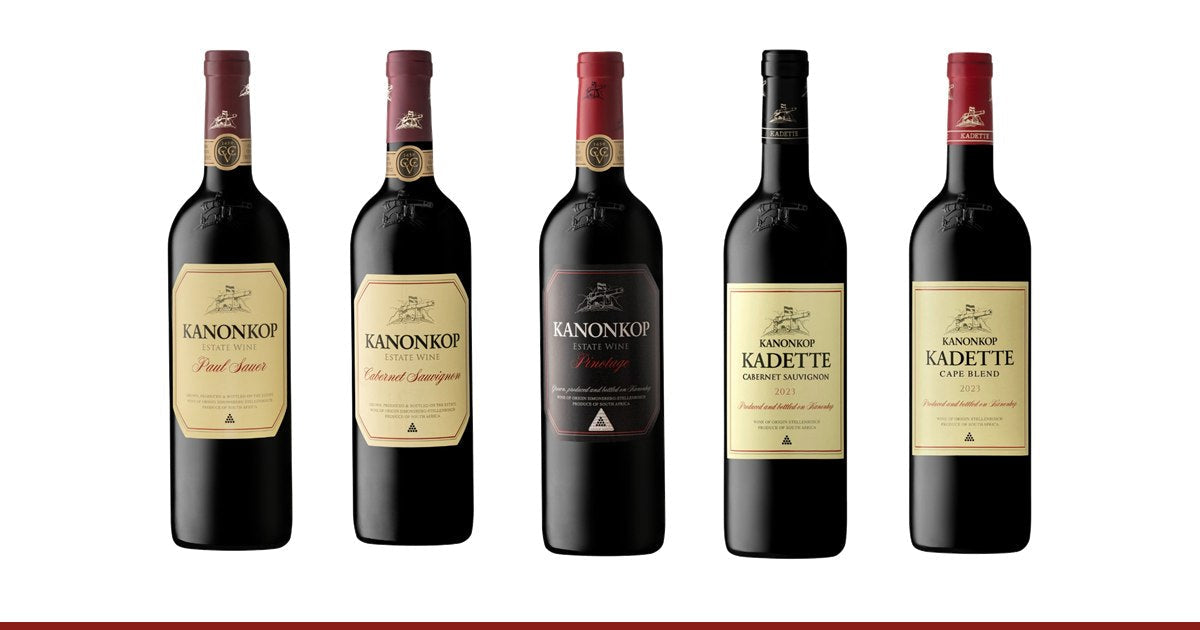
Cabernet Sauvignon is South Africa's most planted red grape, and Stellenbosch is its heartland. Granite-based soils on mountain slopes like the Simonsberg and Helderberg, and cooling breezes from False Bay, give Cabernet with ripe fruit, firm structure and a long life. It is also the main grape in the Cape's Bordeaux-style blends, such as Kanonkop Paul Sauer.
- Taste: blackcurrant, black cherry, cedar, tobacco and graphite.
- Styles: approachable everyday reds, serious single-vineyard wines that age for 15 years or more, and Bordeaux-style blends.
- Where it grows: Stellenbosch above all, plus Paarl and Franschhoek.
- Food: steak, roast lamb, venison and hard cheeses.
Sauvignon Blanc: how does South African Sauvignon taste?
South African Sauvignon Blanc sits between two famous styles. It is often less tropical than New Zealand's and riper than the Loire's flinty Sancerre. The best come from cool sites near the Atlantic Ocean and False Bay, such as Durbanville, Constantia, Elgin, Darling and Elim.
- Taste: lime, grapefruit, gooseberry, green fig and passion fruit, often with a saline, mineral finish.
- Styles: crisp and unoaked, or barrel-fermented for extra texture. It is also blended with Sémillon in Bordeaux-style whites.
- Food: goat's cheese, salads, oysters, grilled fish and seafood.
Shiraz or Syrah: what is the difference?
It is the same grape. In South Africa, "Shiraz" on a label often signals a riper, bolder wine, while "Syrah" often signals a fresher, more peppery, European-style wine. Warmer areas such as Paarl and parts of Stellenbosch give generous, spicy Shiraz. Cooler sites and the Swartland give leaner Syrah, which is often blended with Grenache and Mourvèdre in Rhône style.
- Taste: blackberry, plum, black pepper, smoked meat, violets and spice.
- Food: barbecue, lamb, sausages, game and hearty stews.
Chardonnay: where does South Africa's best Chardonnay grow?
South African Chardonnay has become one of the country's most acclaimed wines. Elegant, Burgundy-inspired styles come from cool, high or limestone-rich sites in Robertson, Elgin, the Hemel-en-Aarde Valley and the mountain slopes of Stellenbosch. Chardonnay is also the main grape in many bottles of Cap Classique, South Africa's traditional-method sparkling wine.
- Taste: citrus, white peach, green apple and, with oak, hazelnut, butter and toast.
- Styles: crisp and unoaked, polished and barrel-aged, and sparkling.
- Food: lobster, prawns, creamy pasta, roast chicken and mushrooms.
Pinotage: why is it unique to South Africa?
Pinotage is the only one of the six created in South Africa. Professor Abraham Perold crossed Pinot Noir with Cinsaut at Stellenbosch University in 1925. It makes deep-coloured reds with plum, black cherry, spice and smoke, as well as rosés and the red blends known as Cape Blends. Read the full story in What Is Pinotage?, and find the best food matches in Pinotage with Red Meat.
POTUM tip: for a tasting evening at home, open one bottle of each Big Six grape. Taste the whites from lightest to richest (Sauvignon Blanc, Chenin Blanc, Chardonnay), then the reds (Pinotage, Shiraz, Cabernet Sauvignon).
Which Big Six wines should you try first?
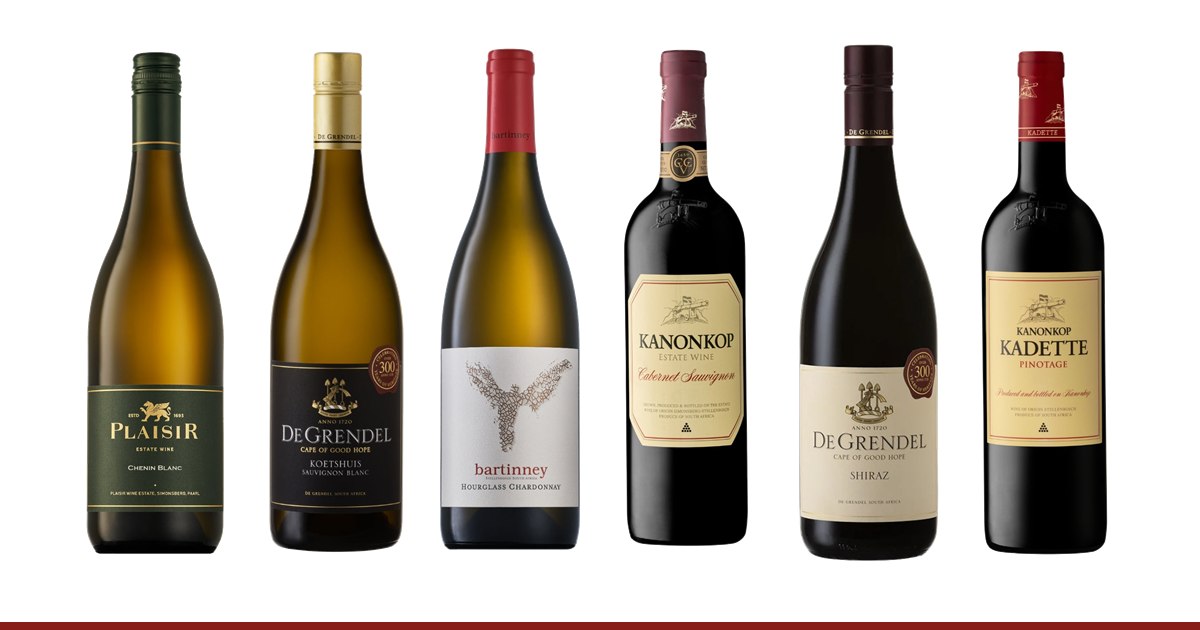
One bottle of each grape, all available from POTUM with delivery across Bulgaria and the EU.
-

Chenin Blanc
Plaisir Chenin Blanc 2023
Pear, quince and white peach with a hint of honey and a silky texture. A textbook, food-friendly Cape Chenin.
View wine -

Cabernet Sauvignon
Kanonkop Cabernet Sauvignon 2020
From roughly 30-year-old vines on the Simonsberg, aged 24 months in French oak. A classic, age-worthy Stellenbosch Cabernet.
View wine -

Sauvignon Blanc
De Grendel Koetshuis Sauvignon Blanc
De Grendel's flagship, partly barrel-fermented Sauvignon Blanc, with white peach, citrus and a creamy, mineral texture.
View wine -

Shiraz
De Grendel Shiraz 2022
Bold and spicy Shiraz from Paarl and Firgrove vineyards, with dark fruit, florals and 13 months in oak.
View wine -

Chardonnay
Bartinney Hourglass Chardonnay 2023
A small-batch flagship from steep Banhoek Valley slopes at 400–550 metres. It is creamy and rich, with fresh citrus minerality.
View wine -

Pinotage
Kanonkop Kadette Pinotage 2022
A juicy, approachable Pinotage from Stellenbosch with cherry, mulberry and baking spice. The perfect introduction to the grape.
View wine
Browse every grape in our white wine and red wine collections.
Frequently asked questions
What are South Africa's Big Six grape varieties?
Chenin Blanc, Cabernet Sauvignon, Sauvignon Blanc, Shiraz (Syrah), Chardonnay and Pinotage. Together they cover about 65% of South Africa's wine vineyards and make most of its best-known wines.
What is the most planted grape in South Africa?
Chenin Blanc, with 15,949 hectares at the end of 2025, or about 18% of the national wine vineyard. South Africa grows more Chenin Blanc than any other country.
What is the most planted red grape in South Africa?
Cabernet Sauvignon, with 8,601 hectares at the end of 2025, followed by Shiraz and Pinotage.
Why is Colombar not one of the Big Six?
Colombar (Colombard) is widely planted in South Africa, but it is used mainly for brandy distillation and everyday wines. The Big Six are the grapes that define the country's quality wines.
Is Shiraz the same as Syrah?
Yes, they are the same grape. South African producers often use "Shiraz" for riper, bolder wines and "Syrah" for fresher, more peppery, European-style wines.
Which South African grape is unique to the country?
Pinotage. It was created in 1925 at Stellenbosch University by crossing Pinot Noir with Cinsaut, and it is grown almost entirely in South Africa.
Sources and further reading
- SAWIS: statistics of wine-grape vines (status at 31 December 2025, published 2026)
- Wines of South Africa (WOSA): SA wine industry statistics
- Top Wine SA: SA wine industry stats
- Pinotage Association
- Percentages are calculated from the SAWIS hectare figures. Wine details come from each producer's technical sheets.