


What Is Pinotage? A Guide to South Africa’s Signature Grape
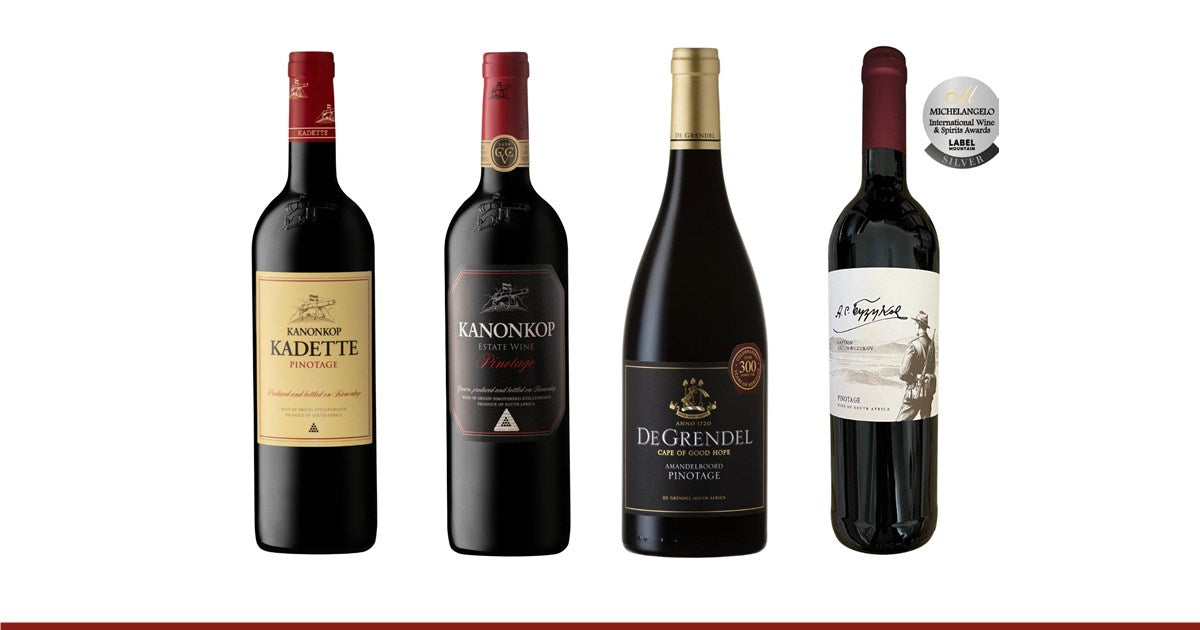
Pinotage is a red wine grape created in South Africa in 1925 by crossing Pinot Noir with Cinsaut. It is South Africa's own grape. Most of the world's Pinotage is grown in the Western Cape, where it makes deep-coloured, fruit-rich red wines with flavours of plum, black cherry, mulberry and spice, as well as rosés, sparkling wines and the blends known as Cape Blends.
| Grape type | Red wine grape (Vitis vinifera) |
|---|---|
| Parents | Pinot Noir × Cinsaut |
| Created | 1925, Stellenbosch, South Africa |
| Created by | Prof. Abraham Izak Perold |
| First wine sold as "Pinotage" | Bellevue 1959, released under the Lanzerac label in 1961 |
| Main growing areas | Stellenbosch, Swartland, Paarl, Durbanville and other Western Cape districts |
| Typical aromas | Plum, black cherry, mulberry, raspberry, spice, smoke, liquorice, mocha |
| Body | Medium to full |
| Serving temperature | 16–18 °C (red) · 8–10 °C (rosé) |
| Pronunciation | PEE-noh-tahzh |
Where does Pinotage come from?
Pinotage was born at Stellenbosch University. In 1925 Abraham Izak Perold, the university's first professor of viticulture, cross-pollinated Pinot Noir with Cinsaut. He hoped to combine the elegance of Pinot Noir with the hardiness and generous yields of Cinsaut, which grew easily in the Cape. In South Africa Cinsaut was then called "Hermitage", so the new grape became Pinotage.
Perold planted the four seeds in the garden of his university residence and then moved on to a new job. The young plants were nearly lost before a young lecturer, Charlie Niehaus, rescued them. The first wine was made at Elsenburg in 1941, and the first wine sold under the Pinotage name came from the Bellevue estate's 1959 vintage, bottled under the Lanzerac label.
Pinotage's international reputation grew in 1991, when Kanonkop winemaker Beyers Truter was named International Winemaker of the Year at the International Wine & Spirit Competition in London. He was the first South African to win the title, and his Pinotage helped him win it. Kanonkop, on the slopes of the Simonsberg in Stellenbosch, is still one of the grape's leading producers.
What does Pinotage taste like?
A well-made red Pinotage is deep in colour and full of dark fruit. Expect:
- Fruit: ripe plum, black cherry, mulberry, blackberry and raspberry.
- Spice and savoury notes: cinnamon, clove, liquorice, smoke and a slight earthiness.
- From oak: vanilla, cedar, dark chocolate and mocha.
- Structure: medium to full body, ripe tannins and fresh acidity. That structure is why the best examples age for 15 years or more.
Pinotage once had a reputation for "rustic" or "nail-polish" aromas. These came from rushed, warm fermentations and are rare in today's carefully made wines. Modern Pinotage is clean, polished and fruit-led.
What are the main styles of Pinotage?
Fresh and fruit-forward
These are juicy, approachable reds made to drink in their first five to seven years, with bright cherry and plum fruit and soft tannins. They suit everyday meals and barbecues.
Serious and age-worthy
Low-yielding old vines, careful fermentation and long ageing in French oak make concentrated, structured wines that improve in the bottle for 15–20 years. Kanonkop Black Label is the best-known example.
Rosé
Pressed off the skins quickly and fermented cool, Pinotage makes a dry, crisp rosé with strawberry and red-cherry fruit.
Cape Blend
A Cape Blend is a red blend in which Pinotage plays an important part, usually alongside Bordeaux varieties such as Cabernet Sauvignon and Merlot. There is no legal definition, but the style is a South African speciality.
Is Pinotage the same as Pinot Noir?
No. Pinot Noir is one of Pinotage's parents, but the two wines taste very different. Pinot Noir is usually pale, light-bodied and delicate, with red-berry fruit. Pinotage is darker, fuller and more tannic, with black fruit and spice, and is closer in weight to Shiraz or Merlot. If you enjoy those richer reds, Pinotage is worth trying.
How should you serve Pinotage?
- Temperature: 16–18 °C for red Pinotage. This is slightly below room temperature, so 15–20 minutes in the fridge on a warm day helps. Serve rosé at 8–10 °C.
- Glass: a large Bordeaux-style red wine glass lets the aromas open up.
- Decanting: young, structured wines such as Kanonkop Black Label benefit from at least an hour in a decanter. Fresh, fruit-forward styles can be poured straight away.
- Storage: lay bottles on their side in a cool, dark place.
What food goes with Pinotage?
Pinotage is made for food cooked over fire. In South Africa it is the classic match for a braai (barbecue), and the same idea works on a Bulgarian table.
- Grilled and barbecued meat: steaks, lamb chops, sticky pork ribs and burgers. It also suits kebapcheta, kyufteta and anything else from the grill.
- Game and duck: venison, roast duck with a berry sauce and slow-cooked game stews.
- Rich, slow-cooked dishes: beef stew, oxtail and clay-pot dishes such as kavarma.
- Spice: gently spiced curries and smoky, peppery marinades.
- Vegetarian: grilled aubergine, mushroom risotto, and mushroom steaks with aged cheddar.
- Pinotage rosé: grilled salmon or tuna, sushi, peri-peri prawns and summer salads.
POTUM tip: chill a fresh, young Pinotage for 20–30 minutes before a summer barbecue. The fruit stays vivid and the wine refreshes rather than weighs you down.
Which Pinotage wines should you try?
All of these are available from POTUM, with delivery across Bulgaria and the EU.
-

Icon · Age-worthy
Kanonkop Black Label Pinotage 2023
From a single block of dryland bush vines planted in 1953 on the Simonsberg. It spends 18 months in new French oak and shows dark cherry, plum, liquorice and dark chocolate. Drink over 15–20 years.
View wine -

Fresh · Fruit-forward
Kanonkop Kadette Pinotage 2022
Kanonkop's approachable 100% Pinotage, with ripe cherry, mulberry, orange zest and baking spice after 12 months in seasoned French oak. A great place to start.
View wine -

Rich · Coastal
De Grendel Amandelboord Pinotage 2022
From shale soils on the Tygerberg, 7 km from the Atlantic. It has blackberry, cherry and clove fruit, with vanilla from French and American oak.
View wine -

Modern · Award-winning
Captain Anton Buzukov Pinotage 2024
A polished, fruit-forward Pinotage named after a Bulgarian volunteer in the Anglo-Boer War. It won a Silver Medal at the Michelangelo International Wine & Spirits Awards 2025.
View wine -

Rosé · Dry
Kanonkop Kadette Pinotage Rosé 2025
A pale salmon-pink rosé made entirely from Pinotage, with strawberry, rose petal and crisp acidity. Serve well chilled with seafood and salads.
View wine -

Cape Blend
Kanonkop Kadette Cape Blend 2023
Pinotage (38%) blended with Merlot, Cabernet Sauvignon, Cabernet Franc and Petit Verdot, with cassis, raspberry and spice. A great example of the Cape Blend style.
View wine
Explore more from the estate that made Pinotage famous in our Kanonkop collection, or browse all South African red wines.
Frequently asked questions about Pinotage
Is Pinotage a dry wine?
Yes. Almost all Pinotage, red or rosé, is made in a dry style. Its ripe, dark fruit can seem sweet, but the wines usually have only a few grams of residual sugar per litre.
Is Pinotage only made in South Africa?
Nearly all of it is. Pinotage was created in South Africa and the Western Cape grows most of the world's plantings. There are small plantings in New Zealand, the United States and a few other countries.
How long can you age Pinotage?
Fresh, fruit-forward Pinotage is best within 5–7 years of the vintage. Top wines from old vines, such as Kanonkop Black Label, can age for 15–20 years or more. Drink Pinotage rosé within 2–3 years.
What is a Cape Blend?
A Cape Blend is a South African red blend that includes a significant share of Pinotage, usually blended with Cabernet Sauvignon, Merlot or Shiraz. There is no legal definition of how much Pinotage it must contain.
What does the name Pinotage mean?
The name joins its two parent grapes: Pinot Noir and Hermitage, the old South African name for Cinsaut. Pinot + Hermitage became Pinotage.
Where can I buy Pinotage in Bulgaria or the EU?
POTUM imports premium South African wine to Sofia and delivers across Bulgaria and the EU. Our range includes Pinotage from Kanonkop, De Grendel and Captain Anton Buzukov.
Sources and further reading
- Pinotage Association: history and producers
- WSET: Polarising Pinotage, the famous South African grape re-examined
- Kanonkop Wine Estate: Beyers Truter
- De Grendel Wine Estate
- Wines of South Africa (WOSA)
- Technical details for each wine come from the producers' own technical sheets.